
Bathroom Remodel Guide: Costs, Timeline & What to Expect
Planning a bathroom remodel means juggling budget, timeline, and a hundred small decisions—tile, fixtures, contractor, permits—often before you've even picked a paint color. This guide breaks down what a remodel actually costs by scope, how long each phase realistically takes, and where projects most often go over budget or fall behind schedule. Whether you're refreshing a powder room or gutting a primary bath down to the studs, you'll find the pricing dimensions, timeline benchmarks, and contractor vetting steps that separate a smooth renovation from a stressful one.
Bathroom remodel quick reference
| Question | Quick answer | Learn more |
|---|---|---|
| What's the average cost of a bathroom remodel? | Roughly $10,000-$25,000 for a full midrange remodel; cosmetic refreshes run $3,000-$8,000. | /cost-guides/bathroom-remodel-cost/ |
| How long does a bathroom remodel take? | 3-6 weeks for a standard full remodel; 1-2 weeks for a tub-to-shower conversion; 6-12 weeks for a full gut with layout changes. | /renovation/whats-a-realistic-bathroom-remodel-timeline-from-demo-to-done/ |
| Do I need a permit to remodel a bathroom? | Only if you're moving plumbing/electrical, changing the layout, or altering structure—like-for-like fixture swaps usually don't need one. | /cost-guides/bathroom-remodel-cost/ |
| Can I DIY any part of a bathroom remodel? | Yes—demo, painting, hardware, and vanity swaps are DIY-friendly. Leave plumbing rough-in, electrical, and waterproofing to licensed pros. | /bathroom-remodeling/ |
| What's a realistic cost for a basic full bath? | Expect $12,000-$18,000 for a standard-size bath with mid-grade tile, a new tub/shower, vanity, and toilet. | /renovation/whats-a-realistic-bathroom-remodel-cost-for-a-basic-full-bath/ |
Everything homeowners need to know about remodeling a bathroom
1. How much does a bathroom remodel actually cost, at a glance
Bathroom remodel costs fall into three broad tiers. A cosmetic refresh (new paint, fixtures, vanity, flooring) runs about $3,000-$8,000. A midrange full remodel—new tub/shower, tile, vanity, toilet, lighting—typically costs $10,000-$25,000. A high-end or full-gut renovation with layout changes, custom tile, and premium fixtures can run $25,000-$60,000+.
For a size-specific breakdown, see what a realistic bathroom remodel cost for a basic full bath looks like, or check the full bathroom remodel cost breakdown for line-by-line pricing.
2. A realistic bathroom remodel timeline, from demo to done
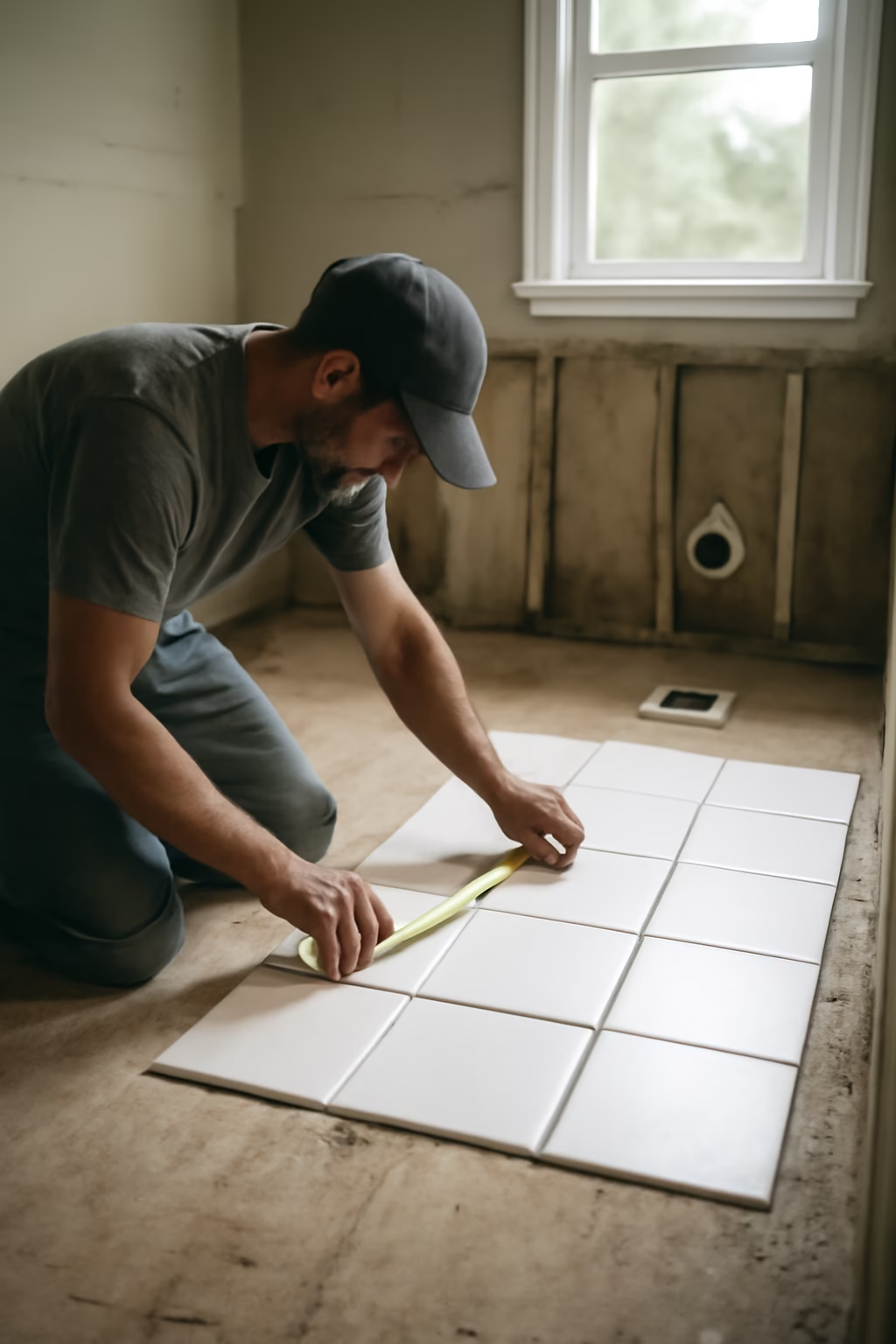
Most midrange bathroom remodels take 3-6 weeks once demo starts—longer if custom tile or special-order fixtures are involved. Rough timeline: demo (1-2 days), rough plumbing/electrical (2-3 days), inspection, drywall/waterproofing (2-4 days), tile (3-5 days), fixture install and finish work (3-5 days).
Full gut renovations with layout changes stretch to 6-12 weeks because they require additional permits and inspections between phases. See a full realistic bathroom remodel timeline from demo to done for a week-by-week schedule.
3. Small bathroom refresh vs full gut renovation — scope and cost differences
A small refresh keeps the existing layout and plumbing locations, swapping surfaces and fixtures—new vanity, toilet, tile, paint, lighting. Cost: $3,000-$8,000. Timeline: 1-2 weeks.
A full gut renovation strips the room to studs and subfloor, often relocating plumbing or expanding the footprint. Cost: $20,000-$60,000+. Timeline: 6-12 weeks, plus permit lead time.
The deciding factor is usually whether the layout works. If the tub, toilet, and sink stay put, a refresh delivers most of the visual impact for a fraction of the cost and time.
4. Walk-in shower and tub-to-shower conversion — a popular mid-size project
Converting a tub to a walk-in shower is one of the most requested bathroom upgrades, especially for aging-in-place or accessibility needs. Typical cost: $6,000-$15,000, depending on shower size, glass enclosure type, and tile scope. Timeline: 1-2 weeks for a straightforward swap using existing plumbing locations.
Costs climb if you add a curbless entry (requires floor reframing for drainage), a bench, or a linear drain—budget an extra $1,500-$4,000 for those upgrades.
5. What drives cost up — moving plumbing, custom tile, premium fixtures
These are the line items that push a bathroom remodel from midrange to high-end:
- Moving plumbing: relocating a toilet, tub, or shower drain adds $1,500-$5,000+ for re-piping and potential slab cutting.
- Custom tile layouts: herringbone, mosaic, or large-format tile requiring specialty cutting adds $1,000-$3,000 in labor.
- Premium fixtures: freestanding tubs, rain shower systems, and designer faucets can add $2,000-$8,000 over builder-grade options.
- Structural changes: knocking out a wall to enlarge the room adds framing, electrical, and often engineering costs.
6. DIY vs hiring a contractor — what's realistic for a bathroom remodel
DIY-friendly: demo (with caution around plumbing/electrical), painting, installing a vanity or medicine cabinet, swapping hardware and light fixtures, laying floating flooring.
Hire a licensed pro: anything involving water supply lines, drain-waste-vent (DWV) plumbing, electrical circuits, or waterproofing behind tile. Mistakes here cause leaks and mold that cost far more to fix later than the labor would have.
Most homeowners end up hiring for plumbing and electrical rough-in while handling demo and finish work themselves to save on labor. If you're ready to get quotes, start with local bathroom remodeling contractors who are licensed and insured for the scope of your project.
7. Permits and inspections — when they're actually required
You generally need a permit when you're moving plumbing or electrical, changing the layout, or altering structural elements like load-bearing walls. A straight fixture swap—new toilet, vanity, or tub in the same location—usually doesn't require one, but local codes vary.
Skipping a required permit can void your homeowners insurance claim later and complicate a home sale, since unpermitted work often surfaces during buyer inspections. Check with your local building department before demo starts, not after.
8. Common delays that push back your remodel timeline
The most frequent culprits:
- Special-order materials: custom tile, vanities, or fixtures on backorder can add 2-8 weeks.
- Hidden damage: rot, mold, or outdated wiring found during demo pauses work for assessment and repair.
- Failed inspections: rework needed before the project can proceed to the next phase.
- Contractor scheduling conflicts: subcontractors (plumber, electrician, tile setter) juggling multiple jobs.
- Change orders: decisions made mid-project—like upgrading tile after demo—reset material lead times.
9. Budgeting for surprises — hidden water damage, mold, or outdated wiring behind the walls
Older bathrooms almost always hide something once the walls open up: water-damaged subfloor from a slow leak, mold behind tile, galvanized pipe that needs full replacement, or knob-and-tube wiring that doesn't meet code.
Build a contingency of 10-20% of your total budget specifically for these discoveries. Homes built before 1978 may also require lead-safe work practices under EPA's RRP Rule, which adds cost and time if paint disturbance is involved. A contractor who's seen this before will flag likely risk areas—plumbing chases, tub surrounds, exterior walls—before demo begins.
10. How to choose a bathroom remodeling contractor — licenses and red flags
Verify the contractor holds an active license for your state and county, carries general liability and workers' comp insurance, and can provide references from bathroom-specific jobs (not just kitchens or additions).
Red flags: a large upfront deposit (more than 10-30% before work starts), no written contract or scope of work, pressure to sign same-day, and an unwillingness to pull permits themselves. A legitimate contractor pulls permits under their own license—if they ask you to pull it, that's a warning sign.
Start your search with local bathroom remodeling contractors who specialize in the scope you need.
11. Getting multiple quotes — what a fair bathroom remodel quote actually looks like
Get at least three written quotes before signing anything. A fair quote itemizes labor and materials separately, specifies fixture and tile allowances (not vague "standard grade"), includes a payment schedule tied to milestones, and states who pulls permits.
Don't just compare bottom-line numbers—compare scope. A $12,000 quote that excludes plumbing rough-in isn't cheaper than an $18,000 quote that includes it. Ask each contractor to itemize the same scope so you're comparing apples to apples.
Want the full cost breakdown by line item?
See exactly what drives bathroom remodel pricing—demo, plumbing, tile, fixtures, and labor—broken down by project size and finish level.
Frequently asked questions
How much value does a bathroom remodel add to a home?
Midrange bathroom remodels typically recoup 60-70% of their cost at resale, according to industry cost-vs-value data. Universal design upgrades (walk-in showers, grab bars) can add appeal for a broader range of buyers.
Can I remodel a bathroom for under $10,000?
Yes, if you keep the existing layout and plumbing locations. Focus your budget on a new vanity, toilet, tile flooring, paint, and lighting rather than moving fixtures or upgrading to a custom shower system.
Is it cheaper to remodel a bathroom yourself?
DIY saves on labor for demo, painting, and cosmetic work, but plumbing and electrical still require licensed labor in most jurisdictions for permit sign-off. Mixing DIY demo with pro rough-in is the most common cost-saving approach.
How long should I expect to be without a working bathroom?
If it's your only bathroom, plan for 1-2 weeks minimum of no access during plumbing rough-in and tile work, even on a standard remodel. Ask your contractor about a temporary toilet/shower plan if the timeline runs longer.
What's the biggest budget-buster in a bathroom remodel?
Moving plumbing fixtures and discovering hidden water damage or mold behind the walls. Both can add thousands beyond the original quote, which is why a 10-20% contingency is standard advice from remodeling professionals.