
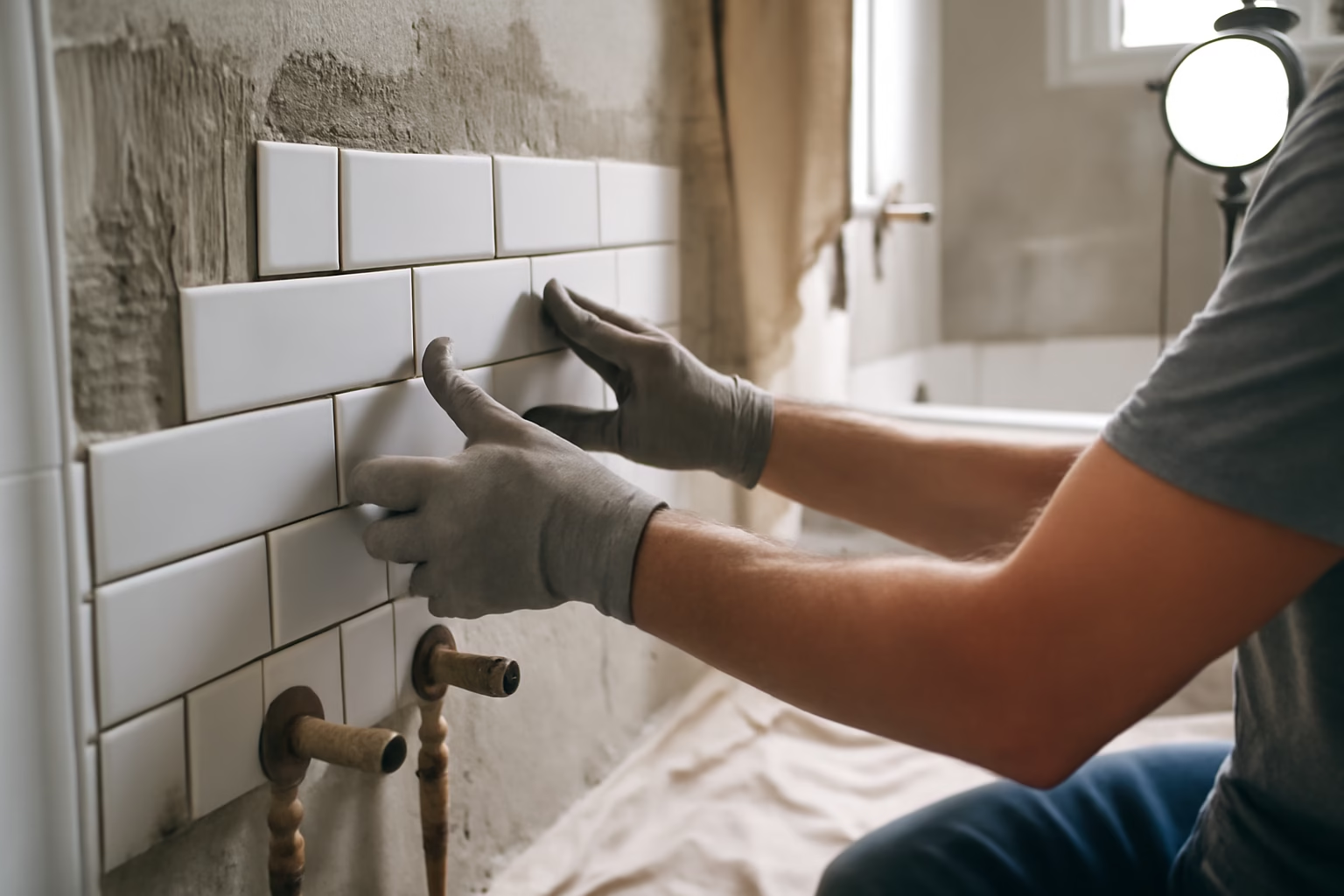
Bathroom Remodel Cost in 2026: What Homeowners Actually Pay
Bathroom remodel quotes swing wildly because scope, size, and plumbing changes drive cost more than finishes do. A painted powder room and a gutted primary suite are not the same project, and lumping them into one "average" number is how homeowners end up shocked by a bid. This guide breaks bathroom remodel cost down by scope, size, shower type, and the specific line items — vanities, tile, plumbing moves, permits — that actually move the total. Use it to sanity-check a contractor's quote before you sign anything.
⚠ Stop the project and call a licensed pro immediately if you see this
Some issues found mid-remodel aren't cost decisions — they're safety issues. Stop work and call a licensed plumber or electrician if you notice:
- A burning or electrical smell after removing a wall or fixture
- Exposed, frayed, or scorched wiring behind tile or drywall
- Active water leaking or pooling once old plumbing is disturbed
- Soft, sagging, or spongy subfloor around the tub or toilet
- Widespread dark or black growth on framing, not just surface mildew
Bathroom remodel cost overview by scope
| Remodel scope | Typical price range | Notes |
|---|---|---|
| Powder room refresh | $2,500 – $8,000 | Paint, new toilet/sink, lighting, no plumbing moves |
| Small guest bath, cosmetic update | $8,000 – $18,000 | New surfaces and fixtures, same footprint |
| Full guest/hall bath renovation | $15,000 – $30,000 | New tile, vanity, tub-to-shower conversion possible |
| Primary/master bath renovation | $25,000 – $60,000+ | Larger footprint, double vanity, custom shower |
| Full gut with layout change | $35,000 – $75,000+ | Plumbing/electrical relocation, permits required |
Bathroom remodel cost breakdown
1. National average bathroom remodel cost (low / typical / high)
National survey averages hide more than they reveal. What matters is where your project falls on the spectrum:
- Low end: ~$3,000-$6,000 — paint, new toilet, faucet, and lighting in an existing layout.
- Typical: $12,000-$22,000 — most full-bath renovations with new tile, vanity, and tub/shower work, no plumbing moves.
- High end: $40,000-$75,000+ — primary suite gut jobs with layout changes, custom tile, and premium fixtures.
Action: Pin down which bucket your project sits in before you request quotes — it changes what a "reasonable" bid looks like. For a line-by-line breakdown of what a no-frills full bath actually runs, see what's a realistic bathroom remodel cost for a basic full bath.
2. Cost by scope — cosmetic refresh vs full gut renovation vs layout change
Scope is the single biggest cost lever in any bathroom project — bigger than tile brand or faucet finish.
- Cosmetic refresh (paint, fixture swap, new mirror/lighting): $3,000-$10,000. Everything stays in place.
- Full gut renovation (strip to studs, new tile/vanity/tub, same footprint): $18,000-$40,000.
- Layout change (moving the toilet, sink, or shower drain): $30,000-$65,000+, because it touches plumbing, subfloor, and sometimes the ceiling below.
Action: If budget is tight, keep every fixture in its current location. Moving a drain 3 feet can add thousands more than moving it 3 inches would.
3. Cost by bathroom size (powder room, guest bath, primary/master bath)
Square footage sets a floor on cost even before you pick finishes:
- Powder room (~20-30 sq ft, no tub/shower): $3,000-$10,000.
- Guest/hall bath (~40-60 sq ft): $10,000-$25,000.
- Primary/master bath (~100-150+ sq ft): $25,000-$70,000+.
Bathroom remodel cost per square foot generally runs $150-$450/sq ft depending on scope — small rooms often cost more per square foot because labor-intensive items (toilet, shower valve, exhaust fan) don't shrink with the room.
Action: Use size as a starting filter, then adjust up or down based on scope from the section above.
4. Walk-in shower and tub-to-shower conversion cost
Walk-in shower remodel cost depends heavily on whether you go prefab or custom-built:
- Prefab tub-to-shower conversion (acrylic surround, franchise install, 1-3 days): $3,000-$8,000.
- Custom tiled walk-in shower (glass panel, niche, bench): $6,000-$15,000+.
- Curbless/zero-threshold walk-in with linear drain and full waterproofing: $8,000-$20,000+.
Action: Get at least two quotes and confirm whether the price includes new waterproofing membrane, not just surface tile. DIY/pro guidance: Swapping a shower door or surround kit is DIYable; cutting a new drain location or building a curbless pan is licensed-plumber-and-tile-pro territory.
5. Vanity, countertop, and fixture cost ranges
Fixtures are where budgets creep — small upgrades add up fast:
- Vanity: stock $300-$1,200, semi-custom $1,200-$3,500, custom $3,500+.
- Countertop: laminate $20-$40/sq ft, quartz $60-$120/sq ft installed.
- Faucet + fixture set: $300-$1,200.
- Toilet: $200-$900; look for an EPA WaterSense label to cut water use without sacrificing flush performance.
Action: Set a per-item cap before you shop showrooms. DIY/pro guidance: Replacing a vanity or faucet on existing supply lines is a reasonable weekend DIY job; running new supply or drain lines to a relocated vanity isn't.
6. Tile, flooring, and waterproofing cost
Tile costs stack in three layers — material, labor, and waterproofing — and skipping the third one is how remodels turn into mold problems:
- Tile material: $2-$30+/sq ft depending on type.
- Installation labor: $7-$15/sq ft.
- Waterproofing membrane (shower pan liner, sheet membrane): $1,000-$3,000 added on top of tile cost.
Action: Never let a contractor skip the waterproofing line item to trim a quote — it's the cheapest insurance against a rebuild. If you're already seeing dark spots on a bathroom ceiling or wall before you even start, check our black mold vs mildew identification guide before demo starts, since active mold changes the remediation cost.
7. Plumbing and electrical work — when moving fixtures adds significant cost
Cost jumps sharply once you touch anything behind the wall or under the floor:
- Swap in place (same drain/supply location): ~$0-$500 added.
- Move a toilet, sink, or shower drain: $1,500-$5,000+ per fixture, more if it means cutting concrete slab.
- New GFCI circuits, exhaust fan venting to exterior: $300-$1,200.
Action: If your budget is fixed, keeping every fixture's footprint unchanged is the single easiest way to protect it. DIY/pro guidance: Any drain relocation or new circuit requires a licensed plumber or electrician — this is not a DIY category, and most jurisdictions require it be permitted and inspected.
8. Labor vs materials — how contractors typically break down a remodel quote
On a typical bathroom remodel, labor runs 40-65% of the total and materials 35-60%, shifting toward materials as finishes get more custom (natural stone, custom cabinetry, designer fixtures).
Action: Ask every contractor for an itemized quote that separates labor, materials, permit fees, and overhead/profit. A one-line lump-sum bid makes it impossible to compare apples to apples or spot where you're being overcharged.
9. DIY bathroom remodel — what's realistic to do yourself and what isn't
| DIY-friendly | Leave to a licensed pro |
| Painting, caulking, hardware swaps | Shower pan waterproofing |
| Installing a stock vanity on existing plumbing | Tile setting in wet/wall areas |
| Swapping a toilet or faucet | Moving drain or supply lines |
| Hanging a mirror or light fixture on existing wiring | New electrical circuits or panel work |
| Assembling flat-pack cabinetry | Subfloor or joist repair after rot/leak damage |
Action: Be honest about the wet-area work specifically — a failed DIY waterproofing job doesn't show up until months later, as a stain or soft floor, and costs far more to fix than it would have cost to hire out.
10. Bathroom remodel timeline and how delays affect final cost
Bathroom remodel timeline and cost are linked — every extra week usually means extra labor cost, storage fees, or a rescheduled crew.
- Cosmetic refresh: 3-7 days.
- Full remodel, same footprint: 3-6 weeks.
- Gut renovation with layout change: 6-10 weeks.
Common delay triggers: backordered tile or vanities, hidden rot or mold discovered once walls open up, and inspection scheduling gaps. Each week of delay can add roughly $500-$1,500 in holdover labor or temporary-fixture costs.
Action: Build a 2-3 week buffer into your schedule and budget before you commit to a move-in date. For a realistic day-by-day breakdown, see what's a realistic bathroom remodel timeline from demo to done.
11. Permits and code requirements that can add to the budget
Permits aren't optional paperwork — skipping them creates real financial risk later.
- Usually requires a permit: moving plumbing or electrical, structural changes, new water heater, adding a window.
- Permit cost: typically $50-$500 depending on municipality and scope.
- Risk of skipping it: failed home inspection at resale, denied insurance claims after water damage, and forced re-work to bring it up to code.
Action: Confirm with your local building department what triggers a permit in your area, and make sure your contractor's quote states clearly who pulls it and who pays for it.
12. Questions to ask a remodeling contractor before signing a contract
- Are you licensed and insured in this state/county, and can I see proof?
- Who pulls the permits, and is that cost included in the quote?
- What's the payment schedule — how much is due upfront vs. at milestones?
- Which parts of the job go to subcontractors, and who supervises them?
- What happens if you find rot, mold, or outdated wiring behind the walls — is there a contingency budget?
- What's the written timeline, and what's the penalty or plan if it slips?
- What's the warranty on labor, separate from the manufacturer warranty on materials?
Action: Get answers in writing before signing anything. If you need to compare vetted options, start with local remodeling contractors rather than the first bid you get.
Frequently asked questions
How much does a small bathroom remodel cost?
A small bathroom remodel (powder room or small guest bath, roughly 20-40 sq ft) typically runs $3,000-$18,000 depending on whether it's a cosmetic refresh or a full renovation with new tile and plumbing.
Is $10,000 enough to remodel a bathroom?
$10,000 covers a cosmetic-to-moderate update in a small bathroom — new vanity, toilet, flooring, and lighting — as long as you don't move any plumbing. It's usually not enough for a full gut of a primary bath or any layout change.
What's the cheapest way to remodel a bathroom?
Keep every fixture in its current location, refinish or reglaze the existing tub/tile instead of replacing it, and limit changes to paint, hardware, lighting, and a new vanity top. This avoids the plumbing and demolition costs that drive most budgets up.
How much does it cost to convert a tub to a walk-in shower?
A prefab tub-to-shower conversion runs $3,000-$8,000. A custom tiled walk-in shower with a glass panel and proper waterproofing runs $6,000-$15,000 or more.
How long does a full bathroom remodel take?
A full remodel that keeps the existing layout usually takes 3-6 weeks. A gut renovation involving a layout change can take 6-10 weeks once permitting and inspection delays are factored in.
Do I need a permit to remodel a bathroom?
Cosmetic work (paint, new vanity on existing plumbing) usually doesn't need a permit. Moving plumbing or electrical, structural changes, or adding a new water heater generally does — check with your local building department before starting.