
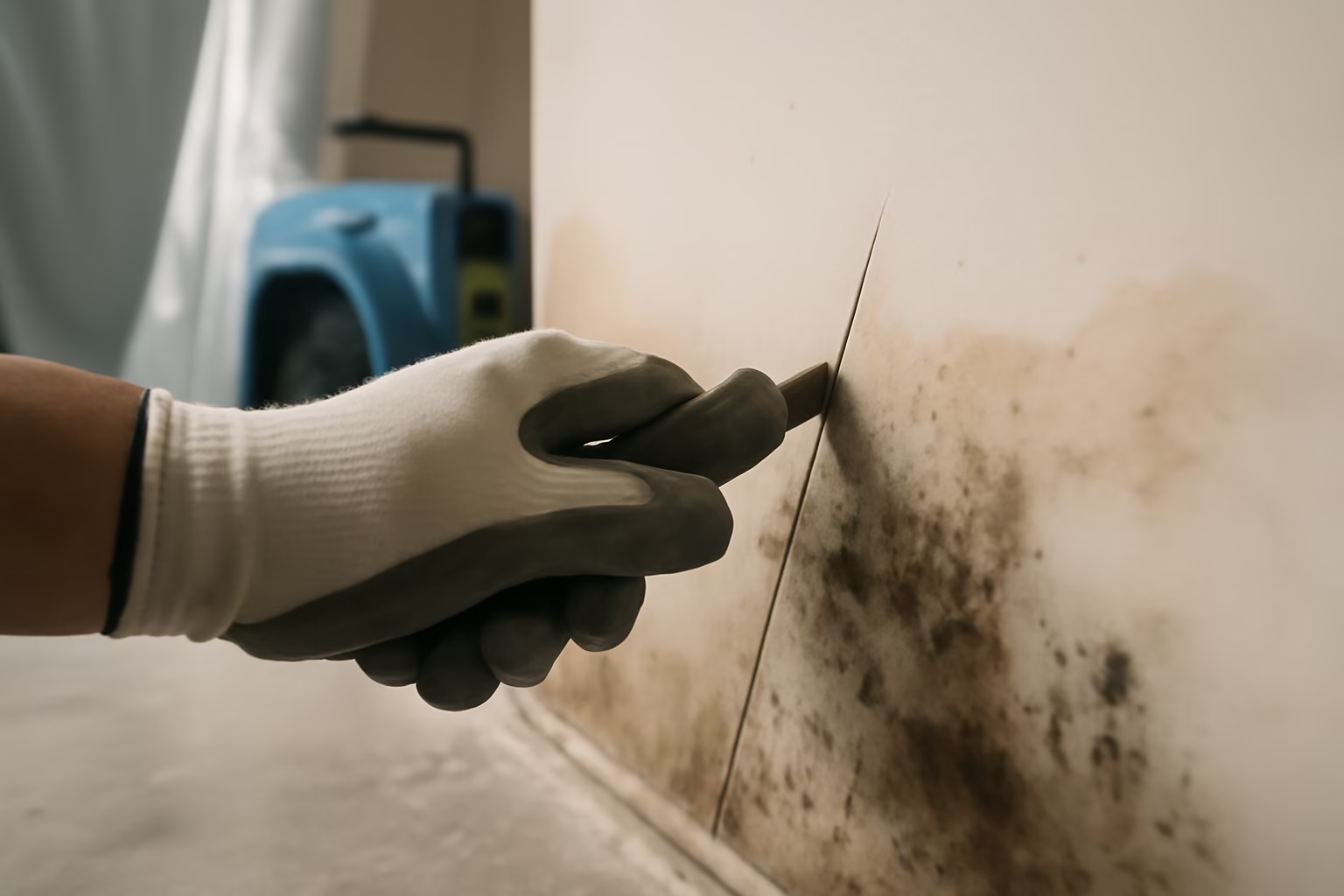
Mold Remediation Cost in 2026: What Homeowners Actually Pay
Mold estimates swing wildly, from a $350 bathroom ceiling scrub to a $25,000 whole-house rebuild, and that range alone causes panic. The real driver isn't the mold itself but three factors: how much square footage is affected, what's behind the wall or ceiling once it's opened up, and whether the moisture source gets fixed at the same time. This guide breaks down 2026 pricing by size, location, severity, and region, so you can tell whether a quote is fair, low-ball, or padded with unnecessary extras before you sign anything.
Mold remediation cost overview by scenario
| Scenario | Typical price range | Notes |
|---|---|---|
| Small bathroom ceiling patch (under 10 sq ft) | $350 - $1,200 | Often DIY-eligible per EPA guidance if surface-level and non-porous |
| Mold behind drywall, single wall section | $1,000 - $4,000 | Price jumps once demo, disposal, and rebuild are added |
| Basement or crawlspace mold (moderate spread) | $1,500 - $7,500 | Often paired with sump pump or vapor barrier repair |
| Whole-room or multi-room remediation | $3,500 - $10,000 | Includes containment, air scrubbers, and full material removal |
| Whole-house / severe structural mold | $10,000 - $30,000+ | Common after long-term leaks, flooding, or HVAC contamination |
Mold remediation cost breakdown
1. National average mold remediation cost (low / typical / high)
Most homeowners land in the $1,500 - $3,500 range for a standard job: one affected room, moderate spread, drywall removal, and cleanup. The full spread nationally runs from $300 on the low end (a tiny, surface-level patch you could clean yourself) to $30,000+ on the high end for whole-house jobs involving structural rot, HVAC contamination, or repeated flooding.
Three things push a quote toward the high end: square footage affected, how many building materials (drywall, subfloor, insulation) need to be torn out and replaced, and whether the contractor has to run containment and negative-air equipment for multiple days. If you're comparing quotes for mold remediation services, ask for a line-item breakdown rather than a single lump sum — it's the only way to spot padding.
2. Cost by affected area size (small patch vs whole room vs whole house)
Size is the single biggest cost lever. A patch under 10 square feet is often a same-day job; anything over 100 square feet typically requires full containment protocols under EPA remediation guidance.
| Area size | Typical cost |
|---|---|
| Under 10 sq ft | $300 - $700 |
| 10 - 100 sq ft | $1,500 - $3,500 |
| 100 - 500 sq ft (whole room) | $3,500 - $7,000 |
| 500+ sq ft (whole house) | $10,000 - $30,000+ |
These figures assume mold is caught early. Left untouched, mold spreads roughly 24-48 hours after moisture exposure, so a delayed call can bump you into the next price tier fast.
3. Cost by location (bathroom ceiling, behind drywall, basement, attic, HVAC ducts)
Where the mold sits changes both labor time and material cost:
- Bathroom ceiling: $450 - $1,500. Usually caused by chronic humidity, not a leak — confirm with our mold vs mildew identification guide before paying for full remediation on what might be surface mildew.
- Behind drywall: $1,000 - $4,000. Cost includes cutting out and disposing of contaminated drywall plus rebuild.
- Basement: $1,500 - $7,500. Larger surface area and often tied to grading or foundation moisture, not just a single leak.
- Attic: $2,000 - $6,000. Access difficulty and roof-ventilation fixes add labor hours.
- HVAC ducts: $2,000 - $6,000. Requires specialized duct-cleaning equipment and sometimes full duct replacement if porous liner is contaminated.
4. Black mold (Stachybotrys) remediation — does it cost more?
Usually, yes — expect to pay 10-25% more than a comparable job with common mold species like Cladosporium or Aspergillus. This isn't because black mold is inherently harder to kill; the CDC and EPA note that all mold should be treated the same way regardless of color or species. The premium comes from stricter containment, full PPE (respirators, disposable suits), and post-remediation clearance testing that homeowners often request for peace of mind after a Stachybotrys identification.
If a contractor quotes a large surcharge purely for "black mold," ask what specifically changes in their protocol. A vague answer is a red flag.
5. Mold inspection and testing cost, separate from remediation
Inspection and remediation are billed separately, and that's intentional — it keeps the person testing for mold from having a financial incentive to find more of it.
- Visual inspection only: $200 - $400
- Inspection with air or surface sampling: $300 - $1,000+
- Full lab analysis (species identification): can add $100 - $300 per sample
Some remediation companies waive the inspection fee if you hire them for the removal work — ask upfront. Independent, third-party testing (not tied to the company doing the remediation) is worth the extra cost when you need an unbiased before/after comparison, especially for insurance claims or real estate transactions.
6. Labor vs materials — containment, air scrubbers, disposal, rebuild
A typical invoice breaks down roughly like this:
| Cost component | Share of total |
|---|---|
| Labor (setup, removal, cleaning) | 35-45% |
| Containment & air scrubbers | 10-20% |
| Disposal fees (contaminated material hauling) | 5-15% |
| Rebuild (drywall, insulation, paint) | 25-40% |
Air scrubber rental alone typically runs $100 - $300 per day and jobs often need equipment running for 2-5 days to meet clearance standards. Rebuild costs climb fast if the contractor discovers rotted subfloor or studs once drywall comes down — always ask for a "not-to-exceed" clause or a clear contingency rate before demo starts.
7. DIY mold cleaning vs professional remediation — when DIY is enough
EPA guidance is specific: mold covering less than about 10 square feet (roughly a 3x3-foot patch) on a non-porous, hard surface can usually be cleaned by a homeowner with detergent, water, N95 respirator, gloves, and goggles. No bleach fog, no biocide fogging — plain cleaning and thorough drying is enough.
Hire a pro when any of these apply:
- Affected area exceeds 10 square feet
- Mold is inside HVAC ductwork
- The material is porous and saturated (drywall, carpet padding, insulation)
- You have respiratory illness, are immunocompromised, or have young children/infants in the home
- The mold followed a flood or sewage backup (see water damage restoration guidance for contaminated-water cleanup rules)
DIY savings are real ($0-$100 in supplies vs $1,500+ professionally) but only when the scope stays small. DIY-ing a large job usually means redoing it later at full professional price once it comes back.
8. Hidden costs: drywall replacement, moisture source repair, mold return
The remediation invoice is rarely the last check you write. Budget separately for:
- Drywall/insulation/subfloor replacement: often not included in the base remediation quote — can add $2-$5 per sq ft
- Moisture source repair: the plumbing leak, roof leak, grading issue, or failed vapor barrier that caused the mold in the first place. This is separate from remediation and can range from $150 (caulk/seal fix) to $5,000+ (roof or foundation work) — see water damage restoration for leak-related repair costs
- Post-remediation clearance testing: $250 - $600 to confirm the job worked
- Repeat remediation: if the moisture source isn't fixed, mold typically returns within 1-2 rainy seasons, and you'll pay for the whole cycle again
Skipping the moisture-source repair to save money upfront is the single most common reason homeowners end up paying for mold remediation twice.
9. Insurance coverage — when homeowners insurance pays for mold
Coverage depends entirely on cause. Standard homeowners policies generally cover mold that results from a "sudden and accidental" covered peril — a burst pipe, an overflowing washing machine, a storm-related roof leak. They typically exclude mold from:
- Long-term humidity or condensation
- Deferred maintenance (a slow leak ignored for months)
- Flooding (requires separate flood insurance, not standard homeowners coverage)
Many insurers cap mold-related payouts at $1,000-$10,000 even on covered claims, regardless of actual remediation cost. Document the triggering event with photos and a plumber's or roofer's report before filing, and get a written remediation estimate that separates the covered peril damage from unrelated pre-existing mold.
10. Cost by region (Northeast vs South vs West coast humidity differences)
Regional climate and housing stock both move the price:
| Region | Typical range | Why |
|---|---|---|
| Northeast | $1,500 - $5,000 | Older homes, more basements, humid summers |
| South / Gulf Coast | $2,000 - $6,000 | High year-round humidity, frequent AC condensation and HVAC duct mold |
| West Coast / Pacific Northwest | $1,500 - $4,500 | Persistent rain and coastal humidity, especially in crawlspaces |
| Southwest / arid states | $1,200 - $3,500 | Lower base rate of occurrence, but plumbing-leak cases are common |
Labor rates in high cost-of-living metros (NYC, SF, Seattle) also run 15-25% above the national average regardless of climate.
11. Questions to ask before hiring a mold remediation contractor
Before signing anything, ask:
- Are you IICRC-certified for mold remediation, and can I see the certificate?
- Will you give me a written, itemized scope of work — not a single lump-sum number?
- Do you use containment and negative-air pressure for jobs over 10 sq ft, per EPA protocol?
- Is post-remediation clearance testing included, and is it done by a third party?
- Who identifies and fixes the moisture source — is that included or a separate line item?
- What's your warranty if mold returns within 12 months?
- Are you licensed and insured in this state, and can I see proof?
A contractor who can't answer these clearly, or who pressures same-day signing with a discount, is worth walking away from. Compare at least two quotes — pricing on identical scopes of work can vary by 40% or more between companies. For other home-repair pricing comparisons, browse House Talk cost guides.
Frequently asked questions
What is the average cost of mold remediation per square foot?
Most jobs run $10 - $25 per square foot, though small isolated spots can cost more per square foot due to minimum service fees, and very large jobs can drop below $10/sq ft as fixed costs (containment setup, equipment mobilization) get spread over more area.
Is $3,000 too much for mold remediation?
Not necessarily. $3,000 sits squarely in the typical national range for a single room with moderate drywall removal and containment. It becomes questionable only if the scope is a small patch under 10 sq ft, or if the quote doesn't itemize labor, containment, disposal, and rebuild separately.
Does mold remediation cost more behind drywall than on the surface?
Yes. Mold behind drywall typically costs $1,000 - $4,000 versus $350-$1,200 for a surface patch, because the job requires demo, disposal of contaminated material, and rebuild — not just cleaning.
Will homeowners insurance pay for mold remediation?
Only if the mold resulted from a sudden, covered peril like a burst pipe. Insurance generally won't cover mold caused by long-term humidity, deferred maintenance, or flooding, and many policies cap mold payouts at $1,000-$10,000 even when covered.
Can I remove mold myself instead of hiring a professional?
Yes, if the affected area is under about 10 square feet, on a non-porous surface, and you're not immunocompromised. Use detergent, water, and proper PPE (N95, gloves, goggles) per EPA guidance. Larger areas, HVAC contamination, or flood-related mold need a professional.
Why did my mold remediation quote go up after the contractor opened the wall?
This is common. Initial quotes are based on visible mold; once drywall comes down, contractors often find additional spread, saturated insulation, or rotted framing that wasn't visible beforehand. Ask for a not-to-exceed clause or a defined contingency percentage before work starts to limit surprise increases.