
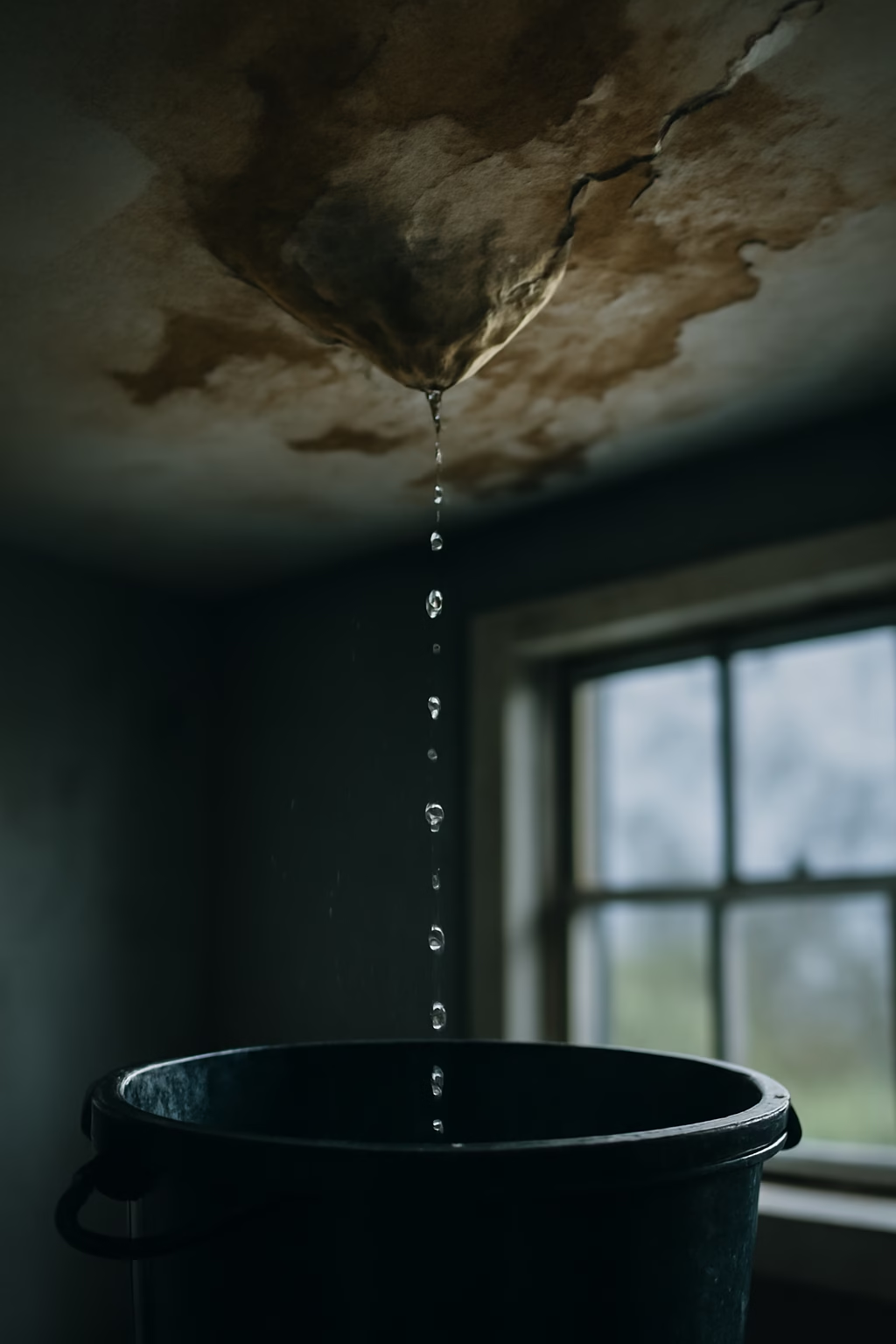
Emergency Roof Leak? Here's What to Do Right Now
Water is coming through your ceiling right now, and you need action, not theory. This page walks you through the exact order of operations: get everyone safe, stop the water, protect the electrical system, and document the damage for insurance — before you touch a mop or call a contractor. Follow the checklist below step by step. Once the immediate danger is handled, you'll know when a leak calls for emergency tarping versus a scheduled repair, and what a full fix typically costs afterward.
⚠ Stop everything and call 911 or an electrician now if you see this
Some leaks are more than water damage — they're a safety emergency. Get out and call for help immediately if you notice:
- Sparking, buzzing, or a burning smell near the leak
- Water pouring steadily from a light fixture, fan, or outlet
- A ceiling that's visibly growing, cracking, or sagging fast
- Standing water touching outlets, cords, or appliances
- Any smell of gas along with water intrusion
Cut power at the main breaker only if you can reach it safely, then evacuate.
Emergency response checklist
| Step | Do this now | Safety risk if skipped |
|---|---|---|
| 1 | Clear people and pets from the room | Ceiling collapse or electrical shock if someone stays underneath |
| 2 | Cut power to the affected circuit at the breaker | Shock or electrocution from water-contacted wiring |
| 3 | Contain water with buckets and towels | Water spreads to floors and rooms below, weakening more structure |
| 4 | Relieve a bulging ceiling with a controlled drain hole | Sudden, uncontrolled ceiling collapse |
| 5 | Photograph and video everything before cleanup | Lost evidence, leading to a delayed or denied insurance claim |
What to do right now, in order
1. Get people and pets away from the affected room first — electrical and collapse risk
Move everyone out of the room immediately, especially if the ceiling is dripping, discolored, or sagging. Water-soaked drywall and insulation can add hundreds of pounds of weight, and a ceiling can give way without much extra warning.
- Do this: Clear the space, shut the door, and keep kids and pets in another part of the house.
- Expected result: No one is standing under a compromised ceiling if it fails.
- DIY/Pro: This is a DIY step — just distance, no tools. If you smell smoke or see sparking near the leak, treat it as an electrical emergency and evacuate the whole area.
Once the room is safe, you can start thinking about drying and water damage restoration for anything already soaked.
2. Contain the water immediately with buckets, towels, and a tarp if accessible
Once the room is clear, slow the damage. Set up containment before the water spreads further into flooring, furniture, and drywall.
- Do this: Place a bucket directly under the drip, layer towels or old sheets around it to catch splash-over, and — only if you can reach the source safely from inside, such as through an attic hatch — tuck a tarp against the underside of the leak.
- Expected result: Water is captured instead of soaking further into the room below.
- DIY/Pro: DIY from inside the house only. Do not climb onto a wet or storm-damaged roof to tarp it yourself — that's a fall risk for a professional. For a longer-term view of what's causing this, see the roof leak repair guide.
3. A bulging or sagging ceiling — how to relieve pressure safely before it collapses
A bulging or sagging ceiling means water is pooling above the drywall. Left alone, the weight can cause a sudden, larger collapse.
- Do this: Put a bucket directly underneath, then use a screwdriver or similar tool to poke a small, controlled hole at the lowest point of the bulge. Stand to the side, not underneath, and wear eye protection.
- Expected result: Trapped water drains through the hole into the bucket instead of building weight until the whole section drops.
- DIY/Pro: Safe as a DIY step for a small, stable bulge. If the sag is large, spreading fast, or you hear cracking, back away — that's a call-a-pro-now situation.
4. Shut off electricity to the area if water is near wiring, outlets, or light fixtures
Water and electricity are a dangerous combination. If the leak is near outlets, switches, ceiling fixtures, or a fan, treat that circuit as live and dangerous until proven otherwise.
- Do this: Go to your breaker panel and shut off the circuit for that room. If you're unsure which breaker, or the panel itself is wet, shut off the main breaker instead.
- Expected result: Power is cut to any wiring or fixtures near the water before anyone touches a switch or the water itself.
- DIY/Pro: Flipping a dry, labeled breaker is DIY. Never touch a wet panel or wade through standing water near outlets — call an electrician or the fire department for that part.
5. Document everything now with photos and video before you start cleanup, for insurance
Insurance adjusters want to see the damage as it happened, not after you've cleaned up. Do this before you move furniture or start drying anything out.
- Do this: Take wide photos and video of the ceiling, walls, floor, and any damaged belongings. Note the date, time, and weather conditions, and keep receipts for buckets, tarps, or emergency services.
- Expected result: A clear, time-stamped record that supports your claim and speeds up approval.
- DIY/Pro: Fully DIY — your phone is enough. Save this alongside estimates you gather using the roof repair cost guide.
6. When to call an emergency tarping or board-up service during active storms
Some situations need a professional on the roof the same day, not next week — especially during an active storm with missing shingles, a hole, or exposed decking.
- Do this: Call an emergency tarping or board-up service if wind has torn off roofing material, you can see daylight or exposed wood from inside the attic, or more rain is expected within 24-48 hours.
- Expected result: A temporary tarp or board seals the opening and stops new water from entering while you wait for full repairs.
- DIY/Pro: Pro-only. Roof access in storm conditions is a serious fall hazard — leave it to local roofing contractors with the right harnesses and equipment. Expect emergency tarping to cost directionally more than a routine patch; see typical ranges in the cost guide.
7. Signs it's no longer safe to stay in the room — evacuate and call for help
Sometimes the safest move is to leave the room, or the house, and let professionals assess it.
- Do this: Evacuate the room and call 911 or your local fire department if you notice a growing sag, cracking or popping sounds from the ceiling, a steady stream of water rather than a drip, or any smell of smoke or burning.
- Expected result: You and your family are out of the way before a structural failure or electrical fault happens.
- DIY/Pro: Not a DIY call. Structural and electrical judgment belongs to first responders and licensed professionals.
8. What happens after the emergency: getting a full roof leak repair scheduled
The tarp or bucket is a stopgap, not a fix. Once the storm passes and the area is safe, schedule a full inspection.
- Do this: Book a roofer to inspect the actual source of the leak, not just the ceiling stain, and get a written scope and estimate before repairs start. Loop in your insurance adjuster if you're filing a claim.
- Expected result: A permanent repair plan instead of repeated emergency patches, with a cost estimate you can compare against typical ranges.
- DIY/Pro: Pro job for diagnosis and repair. Read the roof leak repair guide to know what the contractor should be checking, and see the roof repair cost guide for typical price ranges before you sign anything.
Once it's safe, the real repair begins
Emergency steps stop the immediate damage, but they don't fix the roof. Once the area is dry and safe, get a written estimate for the permanent repair — costs vary widely depending on the cause, materials, and extent of damage.
Frequently asked questions
Is it safe to stay in the house during an active roof leak?
Usually yes, if the leak is isolated, the ceiling isn't sagging, and no electrical fixtures are involved. Close off the affected room, contain the water, and monitor it. Evacuate immediately if you see structural sagging, hear cracking, or smell smoke or gas.
Should I turn off my home's main power during a roof leak?
Only if water is actively near outlets, wiring, or fixtures, or if you can't isolate a single circuit safely. Otherwise, shutting off just the affected circuit at the breaker panel is usually enough.
Will homeowners insurance cover an emergency roof leak?
Often yes, especially for sudden storm or wind damage, but coverage depends on your policy and the cause of the leak. Document everything with photos before cleanup and contact your insurer promptly to start a claim.
Can I just use a bucket and tarp instead of calling a roofer right away?
Buckets and interior containment can hold you over for a few hours, but they don't stop water from entering through the roof itself. If the source is a hole, missing shingles, or storm damage, you need emergency tarping or board-up from the outside as soon as it's safe.
How fast can mold start after a roof leak?
Mold can begin growing within 24-48 hours in wet drywall, insulation, or carpet. Dry out the area as quickly as possible and consider professional water damage restoration if the leak was significant.
What's the difference between emergency tarping and a full roof repair?
Emergency tarping is a temporary fix to stop active water intrusion during or right after a storm. A full repair addresses the underlying cause — damaged shingles, flashing, or decking — and is scheduled once conditions are safe and stable.