
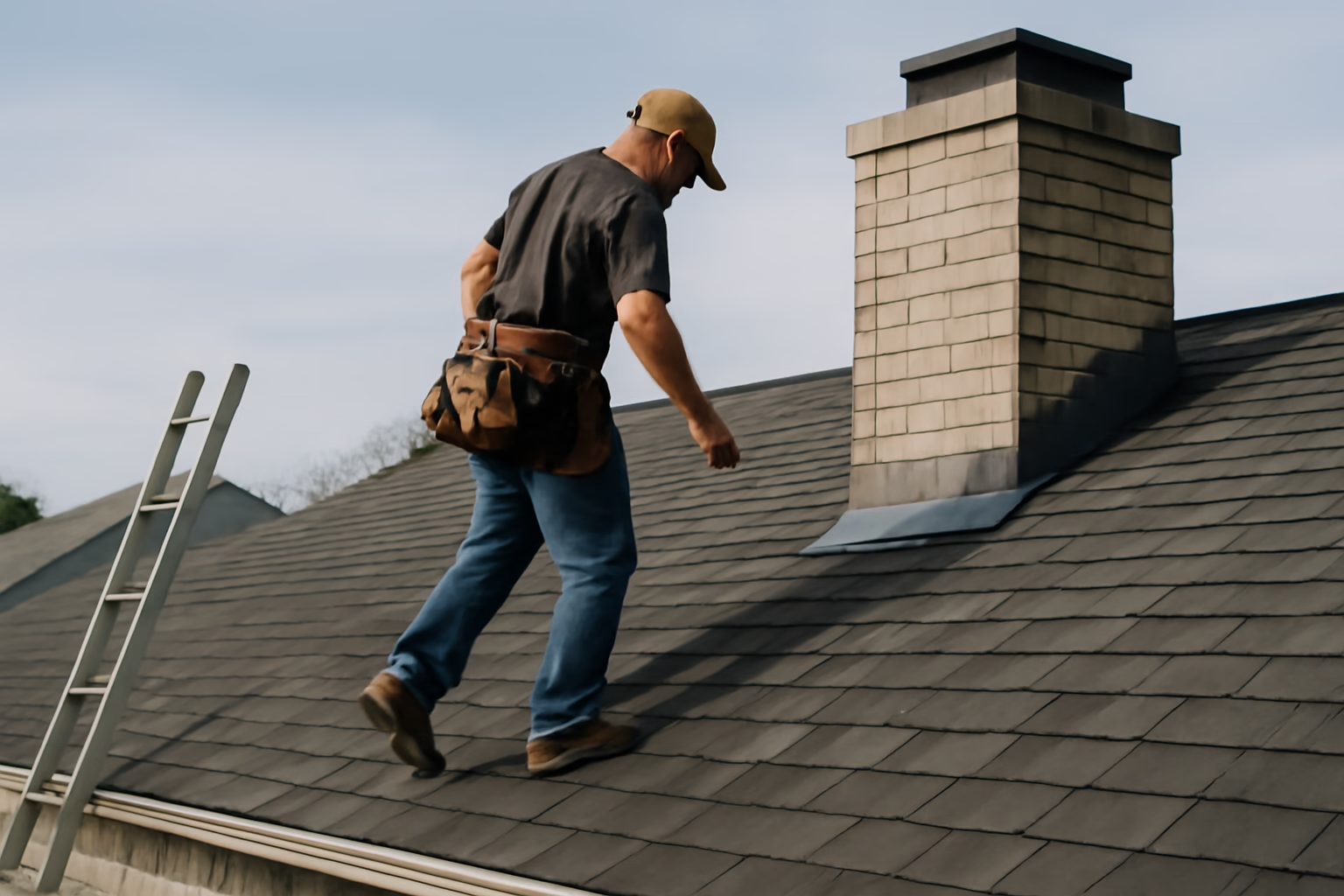
Roof Repair Guide: Common Problems, Signs & Costs
A wet ceiling stain doesn't always mean a roof leak, and a roof leak doesn't always mean you need a full replacement. This guide walks through the most common causes of roof leaks, how to tell a real leak from condensation, what counts as an emergency, and what repairs typically cost. Use the quick reference table to jump to your symptom, then read the matching section for the diagnostic steps and DIY-versus-pro guidance. If you're standing under an active drip right now, skip ahead to the emergency and immediate-action sections first.
⚠ Stop and call a licensed roofer immediately if you see this
Some leaks can't wait for a scheduled repair. Shut off power to the affected area and call a professional right away if you notice:
- A sagging or bulging ceiling
- Water pouring through a light fixture, outlet, or switch
- Daylight visible through the roof deck from inside the attic
- A section of the roof itself visibly sagging or soft underfoot
- A burning or electrical smell near a wet ceiling or wall
Roof problem quick reference
| Symptom | Likely cause | Full guide |
|---|---|---|
| Ceiling stain that only appears in cold weather | Condensation or ice dam backup | See sections 1 and 2 below |
| Drip or stain near a chimney or skylight | Failed or corroded flashing | See section 3 below |
| Water pouring through a light fixture during heavy rain | Active roof breach — treat as emergency | See section 5 and the emergency leak guide |
| Granules in the gutter, curling or missing shingles | Aging or storm-damaged roofing | See sections 2, 6, and 7 below |
| Recurring leak in the same spot after a patch | Underlying decking damage or roof past its service life | See section 7 and the full cost guide |
Everything homeowners need to know about roof repair
1. Is it actually a roof leak, or just condensation? Quick way to tell
Touch the moisture first. Condensation is a thin, even film that shows up daily, usually in bathrooms, over kitchens, or in an attic with poor airflow. A true roof leak is localized, tends to follow a truss or nail line, and gets worse during or right after rain.
- Check the timing. Moisture on dry, sunny days points to condensation, not a leak.
- Check the pattern. A stain that grows outward in a ring, or actively drips, means water is getting in.
- Feel the insulation. Wet insulation directly beneath a vent, chimney, or skylight almost always means a leak.
Still unsure after five minutes with a flashlight? This condensation-vs-leak walkthrough covers the exact checks a roofer would run. Fully DIY-safe — no ladder or roof access needed.
2. The most common causes of roof leaks — shingles, flashing, gutters, ice dams
Most leaks trace back to one of four sources. Scan your roof from the ground with binoculars before assuming the worst.
- Shingles: Curling, cracking, or missing shingles let water reach the decking. Expected sign: bald patches or granules piling up in the gutter. DIY check only — repair is a roofer's job on anything steeper than a walkable pitch.
- Flashing: Thin metal seals around joints (chimneys, valleys, walls) corrode or pull loose over time. Expected sign: leak appears right where two roof planes meet.
- Gutters: Clogged or sagging gutters push water back under the roof edge instead of away from the house. Expected sign: leak worsens after heavy rain, improves after a dry stretch.
- Ice dams: Melting snow refreezes at the eaves and backs water up under shingles. Expected sign: leaks appear only in winter, near the roof edge. See Energy.gov's guidance on attic ventilation and ice dam prevention for the underlying fix.
3. Roof leak near a chimney, skylight, or vent pipe — flashing is the usual culprit
Flashing is the metal or rubber seal wrapped around anything that punctures the roof. It's the single most common leak point because it flexes, expands, and contracts with every temperature swing — long before the shingles around it fail.
- Chimney flashing: Check where the metal meets the brick. Gaps or rust here let water run straight down the chimney chase.
- Skylight flashing: Look for cracked sealant or lifted metal along the frame edges.
- Vent pipe boots: The rubber collar around plumbing vents dries out and splits after 10-15 years — a very common, very fixable leak source.
Expected result: if the leak lines up directly with one of these penetrations, flashing repair (not a full roof replacement) is usually the fix. Pro job — this involves working at roof penetrations and often removing surrounding shingles to reseat the flashing correctly. Typical cost: ~$300-$800 depending on penetration type and roof pitch.
4. What to do the moment you spot a leak, before calling anyone
Contain the damage before you diagnose it. Water spreads fast once it's inside a ceiling cavity.
- Move belongings and place a bucket under the drip immediately.
- Puncture a sagging ceiling bulge with a screwdriver over the bucket — this releases trapped water in a controlled way instead of letting the ceiling collapse.
- Take photos of the stain, the bucket, and any visible roof damage for insurance purposes.
- Check the attic with a flashlight if it's safe to access — trace the water back toward its entry point.
If it's actively raining and water is coming in fast, follow this emergency roof leak checklist instead of troubleshooting the source yourself.
5. Warning signs a leak has become an emergency (sagging ceiling, active flooding, exposed wiring)
Most roof leaks can wait a day or two for a scheduled repair. Some can't. Treat the following as an emergency and act immediately, not after researching quotes:
- Ceiling sagging or bulging — the drywall is holding standing water and can collapse without warning.
- Water pouring through a light fixture or outlet — shut off power to that circuit at the breaker before doing anything else.
- Visible daylight through the roof deck from inside the attic — the roof has an open breach, not just a failed seal.
- A section of roof itself sagging — this can indicate structural damage to the decking or rafters.
Full walkthrough here: what to do during an active, heavy-rain roof leak.
6. How much roof repair typically costs, broken down by problem
Roof repair cost depends almost entirely on what's actually failing, not just square footage. Rough, directional ranges:
- Vent boot or pipe flashing replacement: ~$150-$400
- Chimney or valley flashing repair: ~$300-$800
- Shingle patch (small area, matching materials): ~$250-$700
- Gutter repair or resloping: ~$150-$600
- Ice dam remediation plus attic ventilation fix: ~$500-$2,000
- Decking replacement (if water has rotted the sheathing): ~$800-$3,000+
These are ballpark figures — actual cost depends on roof pitch, material, access, and region. For a full line-item breakdown, see the complete roof repair cost guide.
7. Roof leak repair vs full roof replacement — when a patch isn't enough
A patch fixes a localized failure. Replacement makes sense when the roof itself, not just one component, is at the end of its service life.
- Patch is enough if: the leak is isolated to one flashing point or a small shingle area, and the rest of the roof shows no widespread granule loss or curling.
- Replacement is the better call if: the roof is 20+ years old (typical asphalt shingle lifespan), multiple leaks have appeared in different spots, or a contractor finds soft, rotted decking under more than one section.
- Red flag: if you've paid for the same repair twice in two years, the roof is telling you it's past patching.
A roofer can usually make this call during the same visit as the repair estimate — ask for it in writing before authorizing work. See the cost guide for how replacement pricing compares to repeated patch repairs.
8. Preventing roof leaks with regular inspection and gutter maintenance
Most leaks are preventable with two cheap habits: looking and cleaning.
- Inspect twice a year (spring and fall) from the ground with binoculars — check for missing, curling, or granule-bald shingles.
- Clean gutters at least twice a year, more often under overhanging trees. Clogged gutters are one of the top preventable causes of roof-edge leaks and ice dams.
- Check attic ventilation and insulation. Proper attic airflow prevents the temperature swings that cause ice dams — see ENERGY STAR's home sealing and insulation guidance for target insulation levels.
- Trim overhanging branches to reduce debris buildup and physical shingle damage.
Expected result: a well-maintained asphalt roof reaches its full 20-25 year lifespan instead of failing early from preventable water damage.
9. Does homeowners insurance cover roof leak damage?
It depends on the cause, not the damage itself. Insurers generally distinguish between sudden, accidental damage and gradual wear.
- Usually covered: leaks from a specific storm event — wind-torn shingles, hail impact, a fallen tree limb.
- Usually NOT covered: leaks from age, lack of maintenance, or a roof that was already past its expected lifespan.
- Action: photograph the damage and the suspected cause (storm debris, hail dents) before repairs begin, and check your policy's roof age or "actual cash value" clauses — many insurers reduce payouts on roofs over 15-20 years old.
Call your insurer before authorizing major repair work if the cause looks storm-related — an adjuster may need to inspect the damage first.
10. How to choose a roofing contractor — licenses, insurance, and red flags
Roofing has a high rate of storm-chasing scams, so vetting matters more here than for most home trades.
- Verify a state license where required, and ask for proof of general liability and workers' comp insurance — this protects you if a worker is injured on your property.
- Get a written, itemized estimate that specifies materials, scope, and warranty terms, not just a lump sum.
- Red flags: door-to-door solicitation right after a storm, demands for full payment upfront, and pressure to sign same-day.
- Get at least two quotes for anything beyond a small flashing repair.
Start with vetted local roofing contractors to compare quotes side by side.
11. DIY roof leak fixes — what's genuinely safe to attempt yourself
Some fixes are low-risk and reasonable for a comfortable homeowner. Others require roof access and should go to a pro regardless of cost.
- Safe DIY: clearing gutters and downspouts, sealing a small, accessible gap around a vent boot with roofing sealant, checking and replacing attic insulation to prevent ice dams.
- Not DIY: anything requiring you to walk on a steep or wet roof, replacing flashing, or patching shingles above a single story — falls from roofs are a leading cause of home-repair injuries.
- Rule of thumb: if the fix requires a ladder taller than you're fully comfortable on, or the roof pitch is steeper than about 6:12, call a pro instead.
When in doubt, a $150-$250 diagnostic visit from a roofer is far cheaper than a fall injury or a botched patch that voids a warranty.