
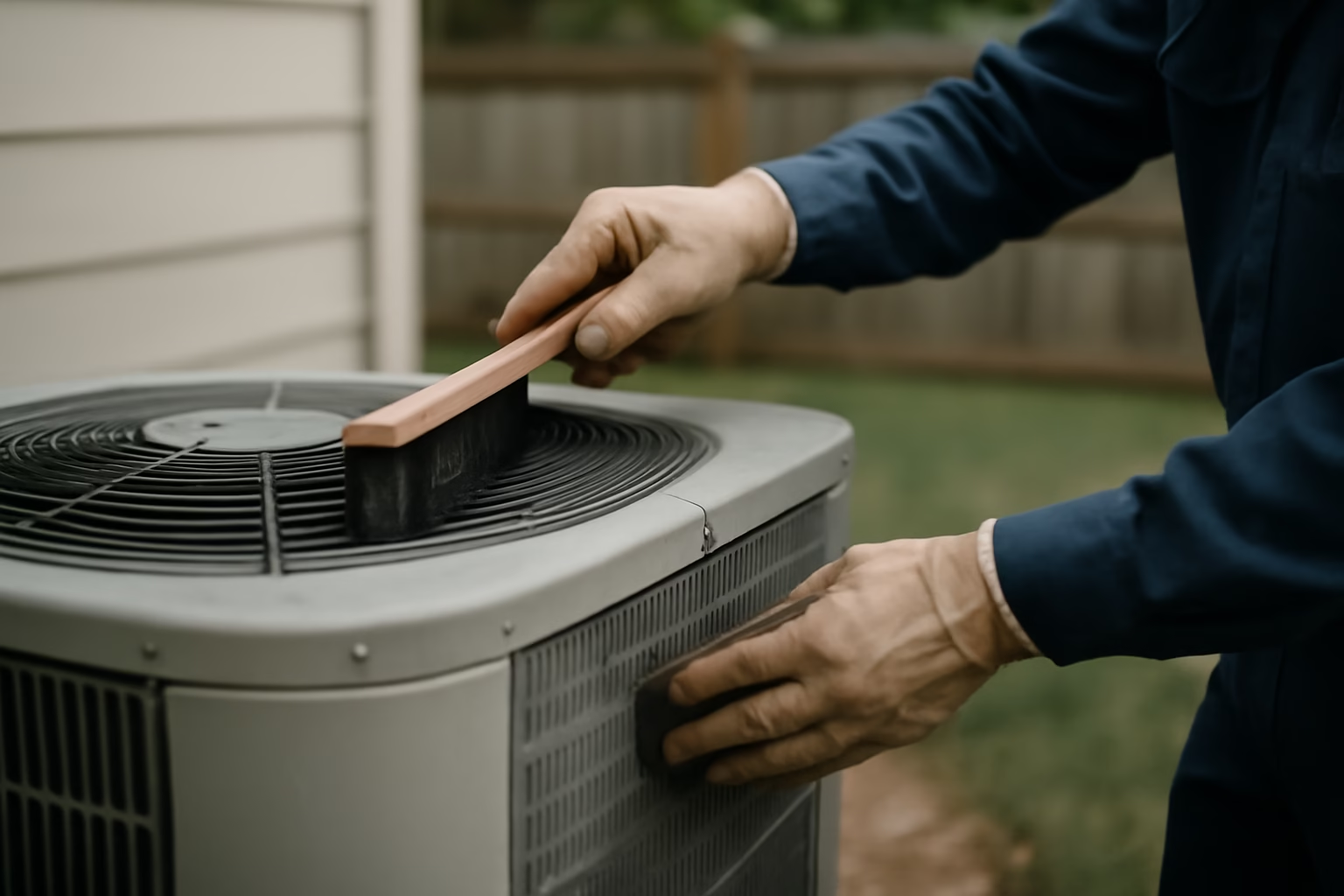
AC Maintenance Checklist: What to Do Each Season
A neglected air conditioner works harder, costs more to run, and breaks down at the worst possible time. Most AC failures trace back to skipped maintenance: a dirty filter, a clogged drain line, or a refrigerant leak nobody caught early. This checklist breaks down exactly what to do monthly, quarterly, and annually, plus which tasks are safe for a homeowner and which require a licensed technician. Follow it and you'll get more cooling for less money, fewer emergency repairs, and a system that lasts closer to its full 15-20 year lifespan.
⚠ Stop and call a professional immediately if you notice any of these
- Burning smell or visible smoke from the indoor unit or outdoor condenser
- Water pouring (not just dripping) from the indoor unit
- Sparks, buzzing, or a scorched smell from the electrical panel or disconnect box
- A hissing or bubbling sound near refrigerant lines
- The breaker trips repeatedly when you try to restart the system
Maintenance schedule at a glance
| Task | How often | DIY or pro? |
|---|---|---|
| Replace or clean air filter | Every 1-3 months | DIY |
| Clear debris around outdoor condenser | Monthly during growing season | DIY |
| Flush condensate drain line | Every 3 months (spring-fall) | DIY |
| Inspect and straighten condenser fins | Once a year or after storms | DIY or pro |
| Full professional tune-up (electrical, capacitor, refrigerant, coils) | Once a year, before summer | Pro |
The AC maintenance checklist
1. Replace or clean the air filter every 1-3 months
Pull the filter and hold it up to a light. If light passes through easily, it's fine for now. If it looks gray and matted and blocks light, replace it. A clogged filter restricts airflow, forces the blower to work harder, and can cause the evaporator coil to freeze. If you've already noticed weak airflow or warm air from your vents, check why your AC isn't blowing cold air before assuming the filter is the only issue. Standard 1-inch pleated filters need checking monthly; thicker 4-5 inch media filters can often go 6-12 months. This is the single easiest DIY task and takes under 5 minutes.
2. Clear debris and vegetation around the outdoor condenser
Walk out to the condenser unit and check for leaves, grass clippings, mulch, or overgrown shrubs within 2 feet of the cabinet. Pull weeds, trim bushes back, and hose off the outside of the coil fins (with the power off) to remove dust and pollen buildup. Expect to see clear airflow through the fins when you're done — if it still looks packed with debris, a coil cleaning by a pro may be needed. Poor airflow around the condenser is a common, overlooked cause of reduced cooling capacity and higher energy bills.
3. Straighten bent condenser fins
Look closely at the metal fins on the condenser cabinet. Bent or crushed fins block airflow just like debris does. For minor bending, a inexpensive fin comb tool (sold at hardware stores) can straighten sections yourself — run it gently along the damaged rows until they're aligned. If large sections are crushed, corroded, or you're not comfortable working around the coil, leave it to a pro; aggressive DIY attempts can puncture the coil and cause a refrigerant leak, turning a $0 fix into a costly repair.
4. Flush the condensate drain line to prevent clogs and leaks
Locate the PVC drain line near your indoor air handler and pour a cup of distilled vinegar down it every 3 months to break up algae and sludge. If water is backing up or you already see moisture around the unit, check what to check first when your AC is leaking water — a clogged drain line is the most common cause. For stubborn clogs, a wet/dry vac at the outdoor termination point can pull the blockage free. This is a DIY-friendly task, but recurring clogs may signal a line that needs professional clearing or a slope correction.
5. Check and tighten electrical connections (professional only)
Loose electrical connections cause arcing, intermittent shutdowns, and in worst cases, fire risk. A technician will shut off power at the breaker and disconnect box, then use a torque screwdriver to check terminal tightness at the contactor, capacitor, and disconnect. This isn't a DIY task — the unit carries 220-240V and stored capacitor charge even when powered off. Expect this check as a standard line item during an AC repair cost estimate or annual tune-up, typically bundled rather than billed separately.
6. Test the capacitor and contactor (professional only)
A failing capacitor is one of the most common reasons an AC hums but won't start, or shuts off shortly after running. A technician tests capacitor microfarad output against its rated spec with a multimeter and checks the contactor for pitted or burnt contacts. Expect a capacitor swap to run roughly ~$150-$450 depending on the unit and access; see the full AC repair cost guide for a breakdown by part and region. Don't attempt this yourself — capacitors store lethal voltage even after the system is powered down.
7. Check refrigerant charge — EPA-certified technician required by law
Under EPA Section 608, only certified technicians can legally handle refrigerant, and for good reason: low charge almost always means a leak, not normal consumption. A tech will measure superheat and subcooling against manufacturer specs, pressure-test for leaks, and recharge only after any leak is repaired. If your system is running but not cooling well, this is a likely culprit — see AC not blowing cold air: what to check first for other possible causes before assuming it's refrigerant. Never let anyone "top off" refrigerant without first finding and fixing the leak.
8. Schedule an annual professional tune-up before peak summer season
Book a full inspection in early spring, before the first heat wave hits and every HVAC company's schedule backs up for weeks. ACCA-recommended tune-ups cover coil cleaning, refrigerant charge verification, electrical checks, and airflow measurement in one visit — catching small issues before they become no-cool emergencies. Find local HVAC technicians and get on the calendar early; spring bookings are typically cheaper and faster than mid-July emergency calls.
What does AC repair actually cost?
Maintenance catches small problems before they become expensive ones, but repairs still happen. Capacitor swaps, refrigerant leak fixes, and compressor replacements all carry very different price tags.Frequently asked questions
How often should I get professional AC maintenance?
Once a year, ideally in early spring before peak cooling season starts. Systems in coastal or high-pollen areas may benefit from twice-yearly visits.
Can I do all AC maintenance myself?
No. Filter changes, clearing debris, and drain line flushing are DIY-safe. Electrical checks, capacitor testing, and refrigerant work require a licensed, EPA-certified technician.
What happens if I skip AC maintenance entirely?
Expect higher energy bills, reduced cooling capacity, and a much higher chance of a mid-summer breakdown. Skipped maintenance also shortens the system's overall lifespan.
Why can't I check or add refrigerant myself?
EPA Section 608 makes it illegal for uncertified individuals to handle refrigerant. It's also a diagnostic task — low charge signals a leak that needs locating and repairing first.
How much does a standard AC tune-up cost?
Tune-ups typically run less than a single repair call. For repair-specific pricing like capacitor or compressor replacement, see the AC repair cost guide.
👇 Real homeowner questions and answers on this issue.