
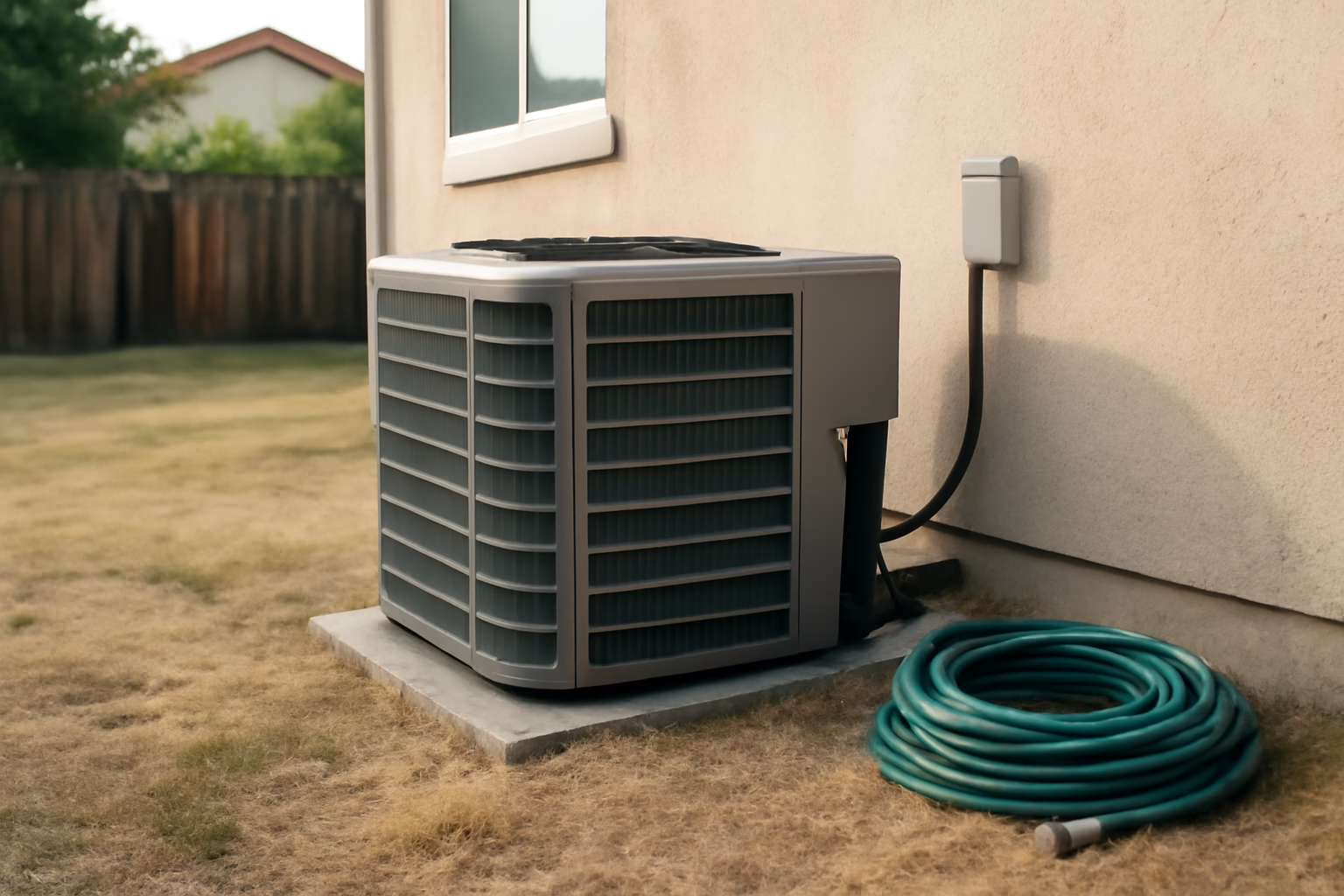
Why Is My AC Not Blowing Cold Air? 10 Things to Check First
A home AC that's not blowing cold air usually comes down to one of a handful of culprits: a dirty filter, a tripped breaker, a frozen coil, or a failing capacitor. Some fixes take five minutes and zero tools. Others need a licensed technician and a refrigerant gauge. Work through these checks in order, starting with the cheapest and easiest, before you assume you need a new system. If you smell burning, see water pooling near the furnace, or hear hissing from the lines, skip ahead to the warning section below and shut the system off first.
⚠ Stop. Turn off your AC now if you notice any of these
Some symptoms mean stop troubleshooting and cut power at the breaker immediately:
- A burning, electrical, or melting-plastic smell from the indoor unit or thermostat
- Water pouring or actively dripping from the ceiling or air handler
- Visible sparks, smoke, or scorch marks near the outdoor disconnect
- A hissing or bubbling sound from refrigerant lines
- The breaker trips again within seconds of resetting it
Quick diagnosis
| Cause | What to check | Can I fix it myself? |
|---|---|---|
| Dirty air filter blocking airflow | Pull the filter and hold it to a light source | Yes — swap it in 5 minutes |
| Thermostat set wrong or dead batteries | Confirm it's set to COOL, below room temp | Yes — check settings and batteries |
| Tripped breaker or blown fuse | Check your electrical panel and outdoor disconnect | Yes — reset once, call a pro if it trips again |
| Frozen evaporator coil | Look for ice on the indoor coil or refrigerant lines | Partially — turn off system to thaw, pro needed for cause |
| Low refrigerant or a leak | Listen for hissing, check for oily residue on lines | No — requires EPA-certified technician |
AC running but not cooling
If the system runs continuously but the air coming out is lukewarm, start with the filter and the outdoor unit. A clogged filter starves the coil of airflow, and a dirty or blocked condenser can't reject heat properly. If both check out, feel the larger refrigerant line outside — it should be cold and sweating. If it's warm, you likely have a refrigerant leak or a failing compressor, and you'll need a certified technician to diagnose it with gauges. Don't let the system run for days like this; it stresses the compressor unnecessarily.
AC not blowing air
No airflow at all, even room-temperature air, points to the blower motor, a tripped breaker, or a completely clogged filter. Check the breaker first, then pull the filter. If both are fine, listen for the indoor air handler — if it's silent, the blower motor or its capacitor has likely failed. This isn't a DIY electrical repair. Call an HVAC technician; expect a diagnostic fee plus parts, often in the $150-$450 range depending on what's actually broken.
AC not turning on
First check the thermostat display — if it's blank, replace the batteries. Next check your breaker panel and the outdoor disconnect box. If power is confirmed at both and the system still won't start, the issue is likely a failed capacitor, contactor, or control board. This is common after a power surge; see our storm-specific checklist for what to check first when your AC won't turn on after a storm. Beyond basic resets, this needs a licensed technician.
Outside unit not running
Walk out to the condenser. If the fan isn't spinning and you don't hear a hum, check the outdoor disconnect switch and breaker first. If power is present but nothing happens, the capacitor is the most likely failure point — it's the single most common outdoor unit repair. A humming motor that won't spin usually confirms this. Don't attempt to manually spin the fan blade with power connected; that's a shock hazard. Call a technician for a capacitor or motor replacement.
Cold air stops after a few minutes
This pattern — cold air, then it fades — is the classic sign of a freezing evaporator coil, usually from low airflow (dirty filter) or low refrigerant. See our full breakdown on why your AC is freezing up all of a sudden. Turn the system off immediately and let it thaw for a few hours before restarting. If it refreezes within a day of a fresh filter, the cause is almost certainly refrigerant-related and needs a professional leak check.
What to check, in order
1. Check the thermostat settings
Confirm the thermostat is set to COOL, not FAN or HEAT, and that the target temperature is at least 3-5°F below the current room temperature. Smart thermostats sometimes lose their schedule after a power blip. Expected result: you should hear the system click on within a minute. DIY: yes — this takes 30 seconds and fixes a surprising number of "broken AC" calls.
2. Check the air filter
Pull the return air filter and hold it up to a light. If you can't see light through it, airflow is choked and the evaporator coil can freeze, which stops cold air production entirely. A clogged filter is one of the top causes behind an AC freezing up all of a sudden. Expected result: stronger airflow within minutes of replacing it. DIY: yes — a new filter costs $10-$30 and takes 5 minutes.
3. Check the circuit breaker
Go to your electrical panel and look for a tripped breaker labeled AC or HVAC. Also check the outdoor disconnect box next to the condenser. If it tripped during a storm, see our checklist on what to check after your AC won't turn on after a storm. Expected result: the system powers on once reset. DIY: reset it once; if it trips again immediately, stop and call a pro — that signals an electrical fault.
4. Check the outdoor condenser unit
Walk outside and confirm the outdoor unit's fan is spinning and you feel warm air blowing off the top. A silent, motionless unit points to a bad capacitor, contactor, or power issue. Clear leaves, grass clippings, or mulch piled against the cabinet — condensers need 2 feet of clearance to breathe. Expected result: fan spins, unit hums audibly. DIY: clearing debris is fine yourself; electrical or motor issues need a licensed HVAC tech.
5. Check for ice on the evaporator coil or refrigerant lines
Open the indoor air handler panel or look at the larger insulated copper line outside. Ice buildup means airflow or refrigerant is restricted, and running the system further can damage the compressor. Expected result: no visible frost or ice. DIY: turn the system off and set the fan to ON to thaw it over a few hours. Diagnosing why it froze — low refrigerant, dirty coil, weak blower — needs a professional.
6. Check the refrigerant lines and listen for hissing
Stand near the outdoor unit and the line set and listen for a continuous hissing or bubbling sound, and look for oily residue at joints — both indicate a refrigerant leak. Low refrigerant means the system can run constantly but never actually cool the air. Expected result: no hissing, no oil stains. DIY: no — refrigerant handling is federally regulated under the EPA's Clean Air Act and requires certification.
7. Check the condensate drain line
Find the PVC drain line near your indoor air handler and check whether it's clogged or backed up. A clogged drain can trip a safety float switch that shuts the whole system down to prevent water damage. Expected result: water drains freely, no standing water in the drain pan. DIY: yes — flushing the line with a wet/dry vac or a vinegar solution is a homeowner-level fix.
8. Check the capacitor and contactor
If the outdoor fan and compressor both stay silent, the run capacitor or contactor relay has likely failed — common after 8-10 years of summer heat cycling. A bulging or leaking capacitor is a clear visual sign. Expected result: unit starts immediately after replacement. DIY: no — capacitors hold a electrical charge even when the power is off and should be replaced by a technician; expect roughly $150-$450 for the swap.
9. Check the ductwork for leaks or disconnections
Feel along accessible ductwork in the attic, basement, or crawlspace for warm air leaking from seams, gaps, or a disconnected joint. Leaky ducts can lose 20-30% of cooled air before it reaches your rooms, per Energy.gov estimates. Expected result: consistent airflow and temperature at every vent. DIY: sealing small gaps with mastic tape is doable; major duct repairs or redesign need a pro.
10. Check the age and refrigerant type of the system
If your system is 12+ years old and uses R-22 refrigerant (being phased out under EPA regulations), recurring "not cooling" issues may signal it's nearing end-of-life rather than needing another patch repair. Expected result: a tech can confirm refrigerant type and estimate remaining lifespan during a service call. DIY: no — this is a judgment call for a licensed technician, especially when weighing repair cost against replacement.
Not sure if this is a $150 fix or a $3,000 one?
Capacitor swaps, refrigerant recharges, and full compressor replacements land in very different price brackets. Before you call anyone, see typical price ranges for every common AC repair in our HVAC repair cost guide, so you know what a fair quote looks like.Frequently asked questions
Why is my home AC not blowing cold air but still running?
The unit runs but the compressor or refrigerant system isn't doing its job — usually low refrigerant, a dirty condenser coil, or a frozen evaporator coil. Check the filter and outdoor unit first, then call a technician if the line set outside isn't cold.
Why is my house AC not cold even though the thermostat is set correctly?
Thermostat settings rule out one variable, but the actual cooling happens at the coils and compressor. If settings look right and air still isn't cold, move to the filter, outdoor unit, and refrigerant checks above.
Can I fix an AC blowing warm air myself?
Some causes are DIY-friendly — a dirty filter, tripped breaker, or thermostat setting. Others, like a refrigerant leak, bad capacitor, or failed compressor, require a licensed technician and specialized tools, per EPA refrigerant handling rules.
How much does it cost to fix an AC that's not blowing cold air?
It ranges widely: a capacitor replacement runs roughly $150-$450, a refrigerant recharge can run $200-$600+ depending on the leak, and a compressor replacement can exceed $2,000. See our HVAC repair cost guide for detailed ranges by repair type.
Why does my AC blow cold air for a few minutes, then stop?
This is the signature of a freezing evaporator coil, typically caused by restricted airflow (dirty filter, blocked vents) or low refrigerant. Turn the system off to let it thaw before running it again, and address the underlying airflow or refrigerant issue.
When should I call a professional instead of troubleshooting further?
Call immediately if you notice burning smells, water leaking near the unit, hissing refrigerant lines, or a breaker that keeps tripping. For anything involving refrigerant, electrical components, or the compressor, a licensed HVAC technician is required by law in most cases.
👇 Real homeowner questions and answers on this issue.